Choosing the top Stainless Steel Syringes suppliers in 2026 requires more than comparing prices. It requires evidence from manufacturing floors, validation records, and customer feedback. These syringes may look simple. Yet tiny variations in barrel finish, plunger fit, or tip geometry can affect accuracy and repeatability. In laboratories, clinics, and industrial testing rooms, a smooth stroke matters. So does a clean, traceable production history.
This guide examines suppliers through practical criteria: stainless-steel grade, dimensional control, sterilization options, packaging, minimum orders, and technical support. It also considers whether a supplier can provide clear certificates, lot identification, inspection data, and responsive corrective action. W. Edwards Deming, a leading quality expert, wrote, “Quality comes not from inspection, but from the improvement of the production process.” That principle fits Stainless Steel Syringes especially well. A polished sample is not enough. A dependable supplier repeats that result across batches.
The 2026 supplier landscape is changing, though not always clearly. Some companies advertise precision without publishing meaningful tolerances. Others offer excellent engineering but limited documentation. That gap deserves attention. We will compare established manufacturers and specialized producers without treating visibility as proof of quality. Where evidence is incomplete, this article will say so. That is less impressive than a confident ranking, but more useful to buyers. Readers should still confirm current specifications, intended use, and applicable quality requirements before placing an order. The goal is practical judgment: safer sourcing, consistent performance, and fewer expensive surprises.
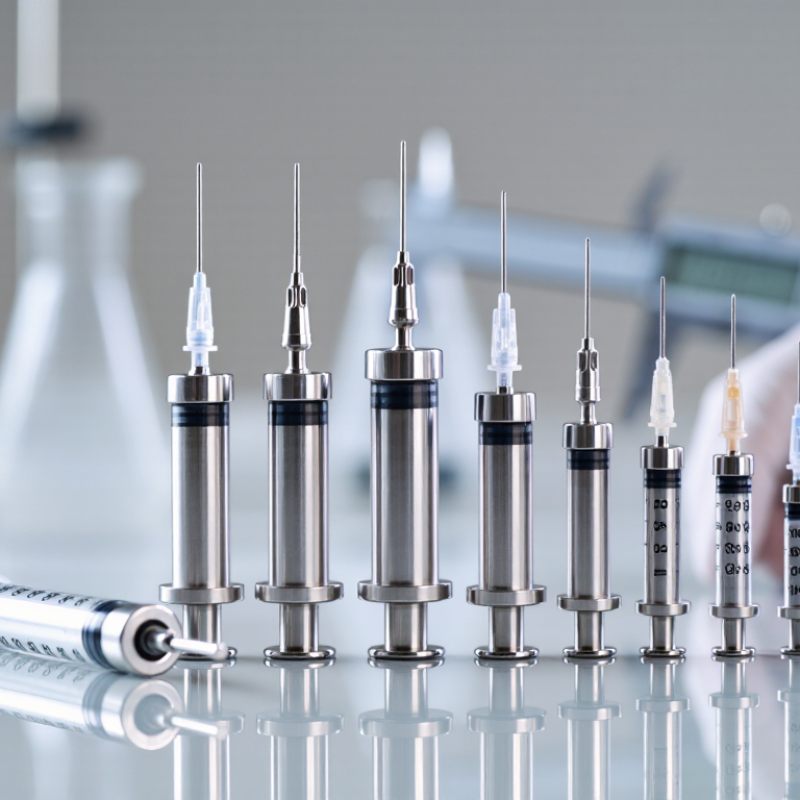
The 2026 market for 316L stainless steel syringes is shaped by durability, corrosion resistance, and repeatable dosing. The World Health Organization estimates that more than 16 billion injections occur globally each year. This creates demand for dependable components, especially in laboratory, veterinary, and specialized medical applications.
Market intelligence from Grand View Research places the global medical syringes market on a strong growth path through 2030. However, most reports combine plastic, glass, and metal products. They rarely separate 316L stainless steel syringes. That is a data weakness. Buyers should therefore examine supplier-level figures, including annual output, rejection rates, sterilization compatibility, and material traceability. A 316L certificate alone is not enough.
Performance details matter. Procurement teams increasingly request low-burr tips, smooth internal bores, and stable dimensions after repeated thermal cycles. ASTM and ISO material controls can support verification, while independent testing should confirm corrosion resistance and extractables. Demand is also moving toward smaller production batches and customized needle interfaces. The numbers look promising. Yet forecasts can overstate conversion speed, because qualification may take months. Suppliers with documented process controls, batch records, and responsive technical support are better positioned for 2026 contracts.
Supplier screening should begin with evidence, not polished brochures. A valid ISO 13485 certificate shows a quality management system for medical devices. It does not guarantee every syringe meets your specification. Check the certificate scope, issuing body, expiry date, and manufacturing site. Ask how deviations, complaints, and corrective actions are controlled.
ISO 9626 matters when stainless steel needle tubing is part of the design. Request test records for dimensions, tensile strength, ductility, and corrosion resistance. The standard may support tubing quality, but it does not replace complete syringe validation. That distinction is easy to miss. Review drawings, tolerances, surface finish, and connection tests before approval. A supplier should provide samples from normal production, not only selected samples.
Traceability should reach the steel heat or coil number. Each lot needs linked material certificates, inspection results, operators, equipment, and release records. Look for documented checks on leakage, cleanliness, burrs, particulate matter, and packaging integrity. Records should remain readable and quickly retrievable. During an audit, vague answers are warning signs. So are repeated manual changes.
A strong supplier welcomes a technical audit and explains failures without hiding them. Still, no system is perfect. Sampling plans can miss defects. Human review can fail. Require calibrated instruments, validated cleaning processes, and measurable acceptance criteria. Confirm change notification rules before placing a long-term order. Supplier performance should be reviewed through delivery data, nonconformities, response time, and recurring defect trends.
2026 Top Stainless Steel Syringes Suppliers?
Capacity changes the risk. At 1 mL, graduation readability and plunger smoothness strongly affect dosing. At 100 mL, barrel rigidity, seal compression, and operator force become more important. A useful supplier benchmark checks accuracy at 10%, 50%, and 100% capacity. It should report bias, repeatability, and leakage separately. Grand View Research’s 2024 syringe market analysis forecasts roughly 8% annual growth through 2030. That growth may encourage faster sourcing, but speed can hide weak validation.
Sterilization claims need closer inspection. ISO 17665:2024 requires documented moist-heat sterilization development, validation, and routine control. It does not make every stainless steel syringe automatically sterile. WHO’s 2022 Global Report on Infection Prevention and Control estimates healthcare-associated infections affect 7 in 100 acute-care patients in high-income countries, and 15 in 100 in low- and middle-income countries. Reusable designs therefore need verified cycle limits, compatible seals, corrosion testing, and traceable cleaning instructions. A bright surface is not proof of durability. I would not accept it alone.
Tips: Request test results for all three capacity points. Ask whether accuracy changes after 100, 500, or 1,000 sterilization cycles. Check dead space with a calibrated balance. Suppliers should explain calibration uncertainty, not only print a tolerance number. One overlooked detail is the plunger rod. Slight bending can create uneven force and unstable delivery.
| Capacity Range | Typical Barrel Construction | Common Tip / Connection | Typical Graduations | Indicative Accuracy* | Recommended Applications | Sterilization Compatibility | Durability Considerations | Benchmark Level |
|---|---|---|---|---|---|---|---|---|
| 1–2 mL | 316L stainless-steel barrel with precision-machined plunger and replaceable seal | Luer-lock, fixed needle, or blunt dispensing tip | 0.01–0.02 mL | Approximately ±1–2% of nominal volume, depending on calibration and liquid properties | Micro-dosing, analytical preparation, laboratory reagents, and controlled dispensing | Commonly compatible with steam autoclaving when the seal, lubricant, and tip are rated for it; dry heat may also be permitted by the manufacturer | Fine components require careful handling; avoid bending the needle or forcing the plunger | ★★★★★ |
| 3–5 mL | 316 or 316L stainless steel with polished internal surface | Luer-lock or threaded metal tip | 0.05 mL | Approximately ±1–2% of nominal volume | Laboratory transfer, sample preparation, veterinary use, and industrial dosing | Steam sterilization at 121 °C is commonly used for reusable metal assemblies, subject to supplier instructions | Good resistance to corrosion and repeated cleaning; seals are usually the first service component to wear | ★★★★★ |
| 10 mL | Seamless stainless-steel barrel with corrosion-resistant plunger rod | Luer-lock, catheter tip, or blunt dispensing outlet | 0.1 mL | Approximately ±1–2% of nominal volume | General laboratory work, fluid transfer, sampling, and precision dispensing | Typically suitable for autoclave processing if all components are rated for steam; chemical compatibility must be checked for seals | Strong resistance to impact and repeated use; clean and dry after exposure to chlorides or aggressive chemicals | ★★★★★ |
| 20 mL | Heavy-gauge 316L stainless-steel barrel with reinforced plunger assembly | Threaded metal connection, Luer-lock, or dispensing tip | 0.2 mL | Approximately ±1–2% of nominal volume | Bulk laboratory transfer, formulation work, and controlled industrial dosing | Usually compatible with steam autoclaving when configured with a heat-resistant seal; follow validated cycle parameters | Higher mechanical strength than small-volume formats; inspect plunger alignment and seal compression regularly | ★★★★☆ |
| 30–50 mL | Thick-wall stainless-steel barrel, often with a polished or electropolished fluid-contact surface | Large-bore Luer-lock, threaded outlet, or blunt cannula connection | 0.5 mL | Approximately ±1–2% of nominal volume | Viscous liquids, sampling, industrial maintenance, and laboratory bulk transfer | Steam sterilization is commonly available for all-metal designs; elastomer selection determines the practical limit | Excellent structural durability; fluid viscosity and particulate contamination can accelerate seal wear | ★★★★☆ |
| 60 mL | Heavy-duty 316 stainless-steel barrel with robust plunger and replaceable sealing element | Threaded outlet, catheter-style tip, or industrial dispensing connection | 1.0 mL | Approximately ±1–2% of nominal volume | Large-volume transfer, equipment servicing, laboratory process work, and non-sterile dispensing | Autoclave suitability is design-dependent; large assemblies require adequate air removal and drying during the cycle | High resistance to crushing and impact; greater operating force may be required with viscous fluids | ★★★★☆ |
| 100 mL | Heavy-wall stainless-steel reservoir with reinforced plunger rod and industrial-grade seal | Large threaded outlet, hose barb, or custom dispensing fitting | 1.0–2.0 mL | Approximately ±1–2% of nominal volume; verify by gravimetric calibration for critical work | Bulk liquid transfer, industrial dosing, equipment filling, and non-sterile process applications | May be steam-autoclavable in all-metal or high-temperature configurations; confirm the complete assembly’s temperature rating | Very high body durability; handling, cleaning, seal replacement, and ergonomic operating force are key considerations | ★★★★☆ |
*Accuracy values are representative engineering benchmarks for reusable stainless-steel syringes, not guaranteed specifications for every model. Actual performance depends on calibration method, temperature, viscosity, pressure, seal condition, operator technique, and the specific tip or connection. Sterilization cycles and material compatibility must always be confirmed in the supplier’s technical documentation.
Supplier profiles should show more than product photos. Buyers need MOQ, monthly capacity, lead time, and export markets. The World Health Organization estimates that more than 16 billion injections are administered globally each year. That scale increases demand for dependable, traceable syringe components. However, demand alone does not prove supplier reliability.
A practical profile may list an MOQ of 1,000 to 5,000 units for standard models, while custom assemblies often require higher quantities. Monthly capacity should be stated with production conditions. For example, 100,000 units per month means little without inspection and sterilization details. Industry research from Grand View Research identifies continued growth in the global syringes market, supported by healthcare expansion and replacement demand. Stainless steel variants remain relevant where repeated handling, chemical resistance, or laboratory precision matters.
Lead time deserves closer attention. A supplier quoting 15 days may exclude tooling, sampling, or export documentation. Typical production windows can range from three to eight weeks, depending on customization and testing. Export markets should include actual shipment regions, not vague claims such as “worldwide delivery.” UN Comtrade trade data can help compare national export activity, but it cannot verify factory-level performance. Capacity figures still need direct evidence. A cautious buyer should request recent inspection records, sample approval dates, and two shipment references. The process is slower, but a polished profile can still hide weak production control.
Choosing a stainless steel syringe supplier in 2026 requires more than comparing catalog photos. Procurement teams should verify FDA registration, device listing, and applicable product documentation. FDA registration is not the same as FDA approval. Ask for traceable records, manufacturing-site details, and quality-system certificates.
For European distribution, request evidence supporting the correct CE marking route. The paperwork should match the syringe’s intended use, materials, and risk classification. A 316L grade claim also needs proof. Review mill certificates, lot traceability, corrosion testing, and surface-finish data. A polished barrel should feel smooth, with no visible pits or sharp edges. Small details matter.
Unit price can change with order quantity, packaging, sterilization, inspection, and shipping terms. Compare landed cost, not only the quoted price. Warranty terms should define coverage, response time, replacement rules, and exclusions. A twelve-month warranty sounds useful, but it may not cover corrosion caused by improper storage. That assumption can be wrong. I would also check sample consistency before approving a large order. One sample may look excellent while another shows uneven plunger movement. Supplier audits, retained samples, and clear acceptance criteria reduce that risk. The cheapest offer is sometimes the most expensive after testing, rework, and delayed delivery.
More than 16 billion injections occur globally each year. Demand favors durable, corrosion-resistant components. Laboratories and veterinary services need repeatable dosing. Forecasts can still overstate adoption speed.
Check the tip for burrs and sharp edges. Inspect the internal bore for smoothness. Measure dimensions after repeated thermal cycles. Small defects matter.
No. Request lot traceability, mill records, and corrosion-test results. Surface-finish data also deserves review. Independent extractables testing can reveal hidden concerns. One certificate proves too little.
A useful profile lists minimum order quantity, monthly capacity, lead time, and shipment regions. It should also show inspection methods. Ask for recent production records and shipment references. Vague worldwide claims are weak evidence.
Standard models may require 1,000 to 5,000 units. Custom assemblies often need larger quantities. Production may take three to eight weeks. Tooling and testing can extend delivery. Fifteen days sounds optimistic.
Capacity figures need operating context. One hundred thousand units monthly means little without rejection rates. Ask about inspection, sterilization, staffing, and equipment limits. A large number can hide inconsistent output.
Verify applicable regional registration and conformity documents. The records should match intended use, materials, and risk classification. Confirm the manufacturing site and quality system. Paperwork can look complete but remain mismatched.
Compare landed cost, including packaging, sterilization, inspection, and shipping. Review warranty coverage, response time, replacement rules, and exclusions. Improper storage may void corrosion coverage. The cheapest quote may create expensive rework. I would test samples again.
This 2026 guide evaluates the Stainless Steel Syringes market with a focus on 316L stainless steel products, emerging demand, and practical purchasing metrics. It explains how to screen suppliers through ISO 13485 quality systems, ISO 9626 material requirements, full traceability, inspection procedures, and documented quality controls. Product comparisons cover capacities from 1 to 100 mL, measurement accuracy, sterilization options, corrosion resistance, service life, and overall durability.
The supplier review framework examines minimum order quantities, monthly production capacity, lead times, and export coverage without endorsing any specific company. It also provides a compliance and cost checklist covering FDA and CE documentation, verified 316L grade, warranty terms, packaging, and estimated unit pricing. By combining technical performance, manufacturing reliability, regulatory readiness, and total purchasing cost, buyers can identify suitable suppliers for laboratory, industrial, and other permitted professional applications in 2026.

Weinuoer