Choosing a Cattle Injector is not simply a matter of picking the fastest tool. A ranch’s herd size, treatment protocol, operator experience, and product label all affect which design is practical. Common options include single-dose syringes, reusable multi-dose injectors, and automatic syringes. Each handles dose preparation and delivery differently. Small detail, big consequences.
USDA APHIS’s National Animal Health Monitoring System (NAHMS) Beef 2017 report provides useful context on health management in U.S. beef operations. It is a baseline, not a 2026 product ranking, and it does not establish one injector as best for every herd. The Beef Quality Assurance (BQA) Cattle Care and Handling Guidelines offer a practical benchmark: follow product directions, use appropriate injection sites, and generally limit injections to 10 mL per site. Check current guidance and the specific product label before treatment.
This guide compares injector types by dose accuracy, handling, cleaning, durability, and suitability for different workflows. A multi-dose gun may save repeated drawing time during routine work, but it still needs careful calibration and cleaning. A simple syringe can be easier to inspect, yet slower for larger groups. There is no perfect tool. Even experienced crews can overlook maintenance when work gets busy. The right choice is the one that supports accurate dosing, calm handling, and consistent care on your operation.
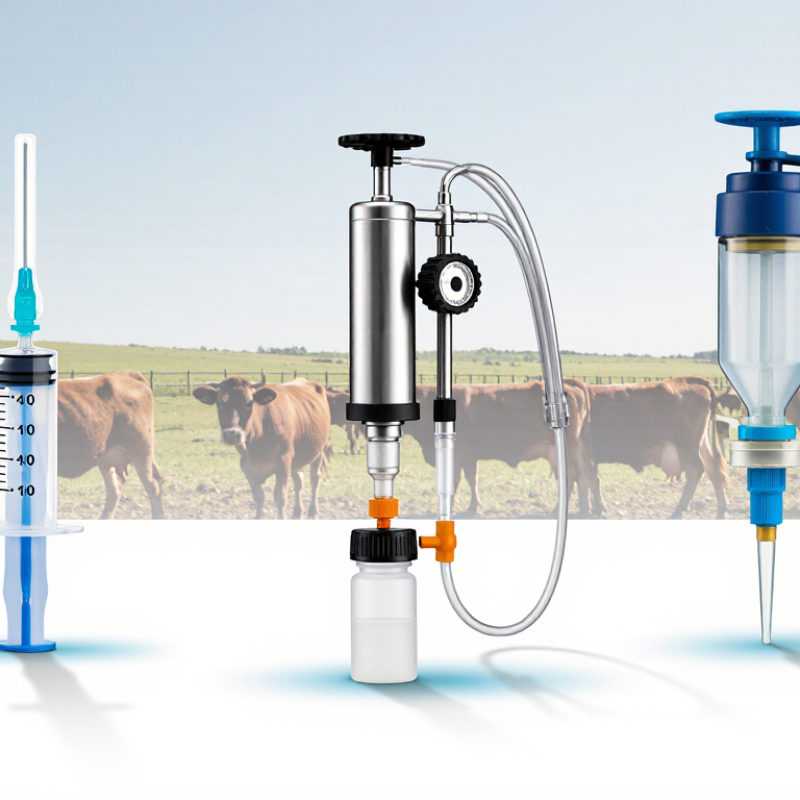
How Cattle Injectors Work and Where They Are Used
In 2026, cattle injectors mainly include single-dose syringes, multi-dose injectors, and automatic dosing systems. Each device pushes a measured liquid through a sterile needle. Single-dose syringes suit small groups and precise treatments. Multi-dose models reduce refilling during vaccination work. Automatic injectors can improve speed when cattle move continuously through a chute. The best choice depends on herd size, product volume, and handler experience.
Cattle injectors are used in chutes, treatment pens, loading areas, and pasture handling facilities. A trained worker may give vaccines under the skin behind the shoulder, when the product label allows that route. Other medicines may require different injection sites or techniques. The label and veterinary direction should guide every decision. A clean needle, correct dose, and calm animal reduce tissue damage and handling stress.
Good technique matters more than a complicated device. Hold the syringe firmly, check the barrel, and avoid damaged equipment. Replace needles when they become dull, bent, or contaminated. Keep treatment records beside the handling gate, not in memory. That small habit prevents repeated doses and missing entries. The first attempt is rarely perfect. Some automatic systems feel efficient but can hide poor needle placement. Regular inspection and practical training remain necessary, even with newer equipment.
Manual Syringes for Routine Cattle Injections
In 2026, manual syringes remain practical for routine cattle injections. They suit small groups, booster doses, and careful individual treatment. USDA APHIS’s Beef Cow-Calf Study reported that more than four in five operations used injectable vaccines. That figure keeps basic syringe skills relevant, even as automated equipment improves.
A 2 mL or 5 mL syringe usually fits common cattle vaccine volumes. A 10 mL model can reduce refilling, but it may increase dosing error for smaller animals. The Beef Quality Assurance National Manual recommends subcutaneous administration when the product label allows it. Use a clean, sharp needle, confirm the route, and avoid injecting through visibly dirty skin. Manual control also helps operators notice unusual resistance, swelling, or leakage.
Accuracy depends on handling, not only equipment. Hold the barrel at eye level before drawing the dose. Check the plunger seal for wear. Replace needles regularly, especially when moving between animals. In practice, workers sometimes hurry and reuse equipment longer than intended. That habit deserves criticism. It can damage animal welfare and weaken product performance. A 2022 WOAH report also emphasizes correct storage, administration, and recordkeeping for veterinary medicines. Write down the animal ID, product, dose, route, and withdrawal information immediately. Small details matter.
What Are the Top Cattle Injector Types in 2026? - Manual Syringes for Routine Cattle Injections
| Injector type |
Typical capacity or dose setting |
Common routine use |
Advantages |
Considerations |
| Standard manual syringe |
Commonly available in sizes from about 1 mL to 20 mL; capacity varies by model. |
Individual injections when the dose is measured and administered one animal at a time. |
Simple operation, direct dose control, and useful for small groups or occasional treatments. |
Requires refilling between doses; check graduations and deliver the prescribed volume accurately. |
| Adjustable-dose self-refilling syringe |
Many models offer adjustable settings, often within ranges such as 0.5–5 mL or 1–10 mL; specifications vary. |
Repeated injections where the product dose is the same for multiple animals. |
Refills between injections and can reduce repeated manual measuring. |
Confirm the dose setting, prime as directed, and clean and maintain the mechanism according to its instructions. |
| Bottle-mount multi-dose syringe |
Dose settings and reservoir sizes differ by model; commonly used for repeat doses from a product container. |
Handling larger groups when a product is supplied in a compatible bottle or container. |
Keeps the product supply connected and speeds up repeated dosing. |
Check container compatibility, dose accuracy, sterility, and product handling requirements on the label. |
| Single-use disposable syringe |
Available in multiple sizes; select a capacity and graduation scale suited to the prescribed dose. |
One-off or individually measured injections, including situations where single-use equipment is preferred. |
New sterile equipment can be used for each treatment, and the dose is measured directly. |
Use and dispose of it safely; do not reuse unless the product and equipment instructions specifically allow it. |
Capacity and dose-setting ranges are representative examples, not universal specifications. Follow the veterinary product label for dose, route, injection site, needle selection, storage, and equipment cleaning.
Automatic and Multi-Dose Injectors for Herd Treatments
What Are the Top Cattle Injector Types in 2026?
Automatic and multi-dose injectors are gaining attention as herds become larger and treatment routines become faster. The USDA National Agricultural Statistics Service reported 93.8 million cattle and calves in the United States in 2022. That scale makes consistent dosing important. It also exposes weak equipment choices quickly.
Multi-dose injectors suit repeated vaccinations across a handling chute. Their attached reservoirs reduce bottle changes and wasted motion. Automatic injectors can deliver a dose after contact with the animal. This helps when cattle move quickly. However, speed is not accuracy. A poorly adjusted device may create leakage, incomplete delivery, or needle damage.
USDA APHIS NAHMS cattle reports emphasize proper restraint, route selection, and injection-site management. These details matter more than a flashy mechanism. For example, operators should check calibration before treating a pen. They should inspect seals, tubing, and needles between groups. The 2024 Grand View Research animal health market analysis also identifies preventive care as a major growth area, supporting demand for efficient treatment tools.
A practical choice depends on herd size, product viscosity, and operator experience. I would not call automatic injectors universally superior. They reduce repetitive hand movement, but they cannot replace training. Multi-dose models can save time, though contamination risks increase when cleaning is rushed. That uncomfortable trade-off deserves more attention.
Needle-Free Injectors and Their Practical Limitations
What Are the Top Cattle Injector Types in 2026?
Needle-free injectors are attracting attention in 2026. They use pressure to push medication through the skin. No needle remains in the animal or disposal container. That sounds cleaner. It is not automatically better.
The USDA APHIS NAHMS Beef 2017 report found that most U.S. cow-calf operations vaccinated cattle. This makes injection accuracy a daily production issue, not a showroom feature. Needle-free systems can work well in restrained cattle. However, movement affects the spray pattern. Thick hides, wet hair, and poor contact may reduce delivery. Some units also require compressed gas, charging equipment, or careful pressure settings. That adds practical work beside the chute.
Field observations often show swelling or small skin marks after high-pressure delivery. These signs can complicate inspection and may concern workers. The Veterinary Record has also highlighted variation in needle-free performance between products, pressures, and injection sites. Evidence remains less consistent than marketing language suggests. I have seen operators underestimate calibration. That mistake is avoidable.
Needle-free injectors may suit high-throughput vaccination, especially where needle control is difficult. They are less convincing for every drug, animal, and handling system. Product labels still control route, dosage, and site. Record the device, pressure setting, lot number, and observed reaction. A conventional syringe may remain the more reliable choice when cattle are restless or treatment volumes are small. In practice, equipment fit matters more than novelty.
What Are the Top Cattle Injector Types in 2026?
Needle-Free Injectors and Their Practical Limitations
General cattle-handling guidance commonly limits subcutaneous (SC) and intramuscular (IM) injections to about 10 mL per injection site. Needle-free injectors do not have one universal dose limit: the permitted volume, route, formulation, and animal age must be confirmed on the product label and validated for the specific device.
Single-dose syringe
Precise and versatile for SC and IM administration, but slower for large groups.
Automatic or repeating syringe
Improves speed during herd work; calibration, cleaning, and needle changes remain essential.
Needle-free injector
Can reduce needle-stick injuries and needle-related contamination, but requires product-specific validation and trained operation.
Practical limitation
Performance can be affected by formulation viscosity, skin thickness, pressure settings, placement, and operator technique.
How to Choose and Use a Cattle Injector Safely in 2026
Choosing a cattle injector in 2026 starts with the treatment, not the price. Manual syringes suit small groups and careful dosing. Automatic repeat-action injectors reduce hand fatigue during larger sessions. Needle-free systems may limit puncture risks, but they require proper training and compatible products. The USDA APHIS NAHMS Beef 2017 report shows that vaccination practices vary across operation types, so one injector cannot fit every herd.
Safety depends on preparation. Read the product label and confirm the approved route, dose, storage temperature, and withdrawal instructions. A veterinarian should review unfamiliar products or sick animals. Use a clean, sharp needle and replace it when bent, contaminated, or damaged. BQA guidance generally favors the side of the neck, avoiding valuable cuts. Keep injections away from the loin and hip.
Restrain cattle calmly. A moving animal can turn a correct injection into a painful injury. Hold the injector firmly, but never rush the dose. Check the barrel for air bubbles before use. Record the animal, product, lot number, dose, route, and date. WOAH animal-welfare standards support minimizing pain, fear, and handling stress during treatment. I still recheck dose settings before every group; confidence can create mistakes. Clean reusable equipment according to its instructions, and discard sharps in an approved container. The 2022 National Beef Quality Audit continues to treat injection-site damage as a measurable quality concern. Small habits matter.
FAQS
Common types include single-dose syringes, multi-dose injectors, and automatic dosing systems. Each device pushes measured liquid through a sterile needle.
It suits small groups and precise treatments. Refilling takes longer, but dose control can feel clearer.
Its attached reservoir reduces bottle changes during repeated vaccinations. It works well beside a handling chute.
Yes, especially when cattle move continuously through a chute. Speed alone does not guarantee accurate delivery.
Workers use them in chutes, treatment pens, loading areas, and pasture handling facilities. Calm handling remains important.
Follow the product label and veterinary direction. Some treatments may require a particular site or technique.
Check the barrel, seals, tubing, calibration, and needle condition. Small cracks can cause leakage or incomplete dosing.
Replace it when dull, bent, or contaminated. A clean, sharp needle can reduce tissue damage.
No. Poor needle placement can remain hidden behind faster operation. The machine helps, but judgment still matters.
Record treatments beside the handling gate. Memory misses details, especially during busy cattle movement.
Rushed cleaning may increase contamination risks. Saving time can create a problem later.
Not necessarily. Herd size, liquid thickness, treatment volume, and operator experience should guide the decision. The first attempt may be imperfect.
Conclusion
In 2026, a Cattle Injector remains an essential tool for delivering vaccines, medications, and other approved veterinary treatments efficiently and accurately. Manual syringes are practical for routine injections and small groups, offering direct control and easy dose adjustment. For larger herds, automatic and multi-dose injectors can reduce handling time and maintain a consistent treatment process when properly calibrated and cleaned.
Needle-free injectors may provide faster administration and reduce needle-related concerns, but their effectiveness depends on correct settings, animal size, medication suitability, and operator training. Choosing the right Cattle Injector requires considering herd size, injection frequency, dose accuracy, animal welfare, maintenance, and treatment instructions. Safe use includes inspecting equipment, using sterile components, selecting the correct injection site, restraining cattle calmly, following veterinary guidance, and recording each treatment. Proper cleaning, storage, and regular inspection help protect both livestock and handlers while supporting responsible herd health management.

 Weinuoer